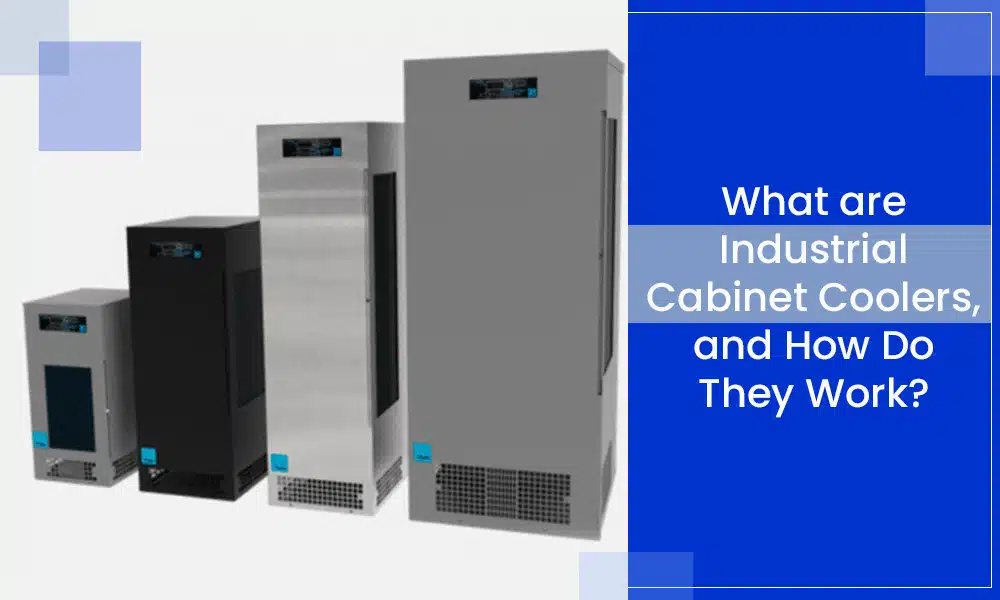
What are Industrial Cabinet Coolers, and How Do They Work?
Summary
Industrial cabinet coolers regulate internal temperatures inside electrical enclosures, protecting sensitive electronics from overheating and reducing equipment failure. This guide covers how vortex coolers, heat exchangers, and air conditioners each operate, which industries benefit most, and the key advantages these systems provide. Understanding how industrial cabinet coolers function helps facilities select the right solution for reliable, long-term equipment protection.
Key Highlights
- Understand how vortex coolers use compressed air to generate targeted cold airstreams efficiently
- Extend equipment lifespan by preventing thermal stress on sensitive electronic components
- Protect industrial enclosures from overheating in manufacturing, telecom, and food processing sectors
- Improve operational efficiency with coolers that prevent performance loss from thermal throttling
- Compare heat exchangers and air conditioners to identify the best fit for your facility
Vortex Coolers use compressed air for cooling. It uses the Vortex phenomenon that creates hot and cold air streams from pressurized air and use the cold fraction to cool the cabinet. Heat exchangers use either ambient air or cold water to remove heat from a cabinet. Air conditions use refrigerant for cooling.
In this comprehensive guide, we'll explore the multifaceted world of cabinet coolers, their indispensable role in industrial environments, and why Pelmar Engineering Ltd. stands as a beacon of excellence in providing tailored cooling solutions across North America.
What features and functionalities define industrial cabinet coolers?
Industrial cabinet coolers are purpose-built cooling devices engineered to regulate the internal temperature of electrical enclosures. These enclosures serve as protective shelters for sensitive electronic components and machinery, necessitating a controlled climate to ensure optimal functionality.
How do Vortex coolers operate in industrial settings?
Cabinet coolers operate by employing the principle of forced air cooling, where compressed air is channelled to generate a chilled airstream within the enclosure. This cold air effectively absorbs and dissipates the heat produced by the enclosed equipment, thereby regulating the internal temperature and mitigating the risk of overheating. By continuously circulating this cooled air, cabinet coolers ensure consistent and reliable operation of critical machinery, even amidst challenging industrial conditions.
What benefits do cabinet coolers offer in industrial settings?
Cabinet coolers offer an array of advantages, including:
- Preventative Maintenance: By maintaining consistent internal temperatures, cabinet coolers pre-empt equipment failures caused by overheating, thus safeguarding valuable assets and minimizing downtime.
- Extended Lifespan: By reducing thermal stress on electronic components, cabinet coolers prolong equipment lifespan, diminishing the need for frequent repairs or replacements and resulting in substantial cost savings.
- Enhanced Performance: Cooler operating temperatures optimize the efficiency and performance of electrical equipment, leading to increased productivity and improved operational efficiency.
- Contaminant Protection: Some cabinet coolers are equipped with filters that purify incoming air, removing dust, debris, and other contaminants that could compromise equipment integrity.
Which industries can benefit from cabinet coolers?
Various industries can benefit from the use of cabinet coolers, including:
- Manufacturing: Machinery and equipment in manufacturing facilities generate substantial heat during operation. Cabinet coolers help maintain optimal temperatures, ensuring consistent performance and minimizing downtime.
- Telecommunications: Communication equipment housed in enclosures requires reliable cooling to prevent overheating and signal disruptions. Cabinet coolers provide efficient cooling solutions for telecom infrastructure.
- Food Processing: In food processing plants, electrical enclosures house control systems and machinery critical to production. Cabinet coolers help maintain hygienic conditions by preventing overheating and potential contamination.
- Energy: Power generation and distribution facilities rely on sophisticated control systems housed in electrical enclosures. Cabinet coolers ensure the reliability and longevity of these systems by regulating internal temperatures.
- Transportation: Vehicles, trains, and aircraft incorporate electronic components that require cooling for optimal performance. Cabinet coolers play a vital role in maintaining the functionality of these systems, especially in challenging environments.
What other cooling solutions does Pelmar Engineering Ltd. offer?
In addition to cabinet coolers, Pelmar Engineering Ltd. offers a comprehensive range of cooling solutions, including:
- Air Conditioners: The Vortec cold air tube utilizes vortex tube technology to produce cold air for industrial spot cooling applications. It operates by using filtered compressed air to generate sub-freezing air as low as -30 degrees Fahrenheit. This technology is effective for cooling metal parts during machining and repair operations, and it's advantageous because it has no moving parts, requires no electricity at the target, and can substantially increase tool life and feed rates during dry machining operations. Vortec's cold air tubes have adjustable temperature and flow settings, and some models feature a frost-free nozzle to prevent mess from frost and condensation . Explore Pelmar's selection of Ice Qube air conditioners, engineered to provide precise temperature control for various industrial applications. Whether it's a small server room or a large manufacturing facility, these air conditioners ensure consistent cooling to maintain optimal conditions.
- Heat Exchangers: Discover Pelmar's lineup of Noren heat exchangers, designed to efficiently dissipate heat and maintain optimal operating temperatures in industrial environments. These heat exchangers utilize innovative thermal management technology to regulate temperatures without the need for refrigerants, offering sustainable and cost-effective cooling solutions.
FAQs
What types of industrial cabinet coolers are most commonly used?
The most common types include vortex coolers, which use compressed air to generate cold airstreams; air-to-air and air-to-water heat exchangers, which transfer heat passively or via a water loop; and air conditioners, which use refrigerant for high-capacity cooling. The right choice depends on your enclosure size, heat load, ambient conditions, and maintenance preferences.
What industries use industrial cabinet coolers?
Industrial cabinet coolers are widely used in manufacturing, telecommunications, food processing, energy production, and transportation. Manufacturing facilities rely on them to prevent production stoppages caused by overheated control panels, while telecommunications infrastructure requires consistent cooling to prevent signal disruptions. Any industry with electrical enclosures housing heat-sensitive equipment benefits from a properly matched cabinet cooling solution.
What maintenance do industrial cabinet coolers require?
Maintenance requirements vary by cooler type. Vortex coolers have no moving parts and require virtually no maintenance beyond ensuring a clean, dry compressed air supply. Heat exchangers may need occasional filter cleaning. Air conditioners require more regular service, including filter replacement and periodic checks of the refrigerant system, to maintain optimal performance and longevity.
About the Author:
A seasoned Mechanical Engineer specializing in hydraulics, Hanan Silbermann brings a deep technical background to fluid control and application engineering.
Following a successful 12-year tenure in Research & Design at Bermad Control Valves, he acquired Pelmar Engineering in 1993. As the head of application engineering at Pelmar, he leverages decades of industry experience to design and implement high-performance technical solutions.