
Hazardous Location Air-to-Water Heat Exchangers for Electrical Enclosures

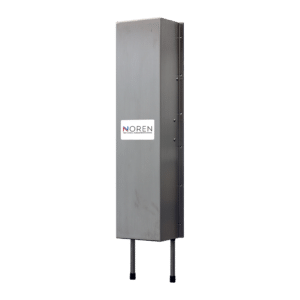
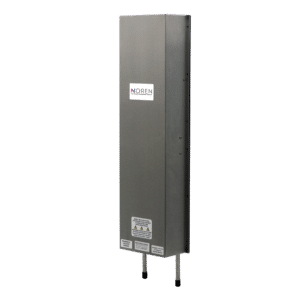
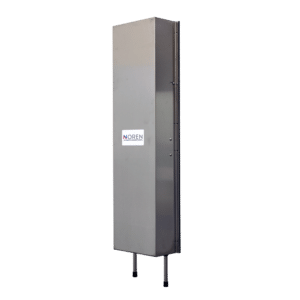
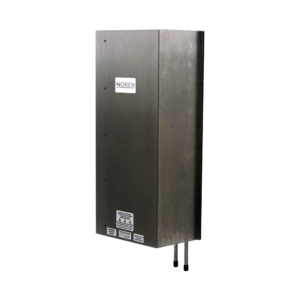
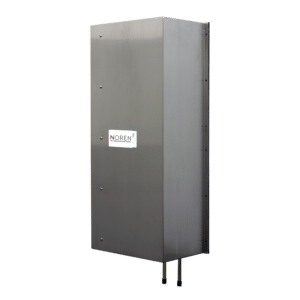
The hazardous location air-to-water heat exchangers listed above are certified for Class I Division 2 and ATEX environments, providing closed-loop enclosure cooling where cooling water is available and ambient temperatures may exceed the desired cabinet temperature.
Every hazloc unit carries UL, CSA, ATEX, or IECEx certification depending on the model, in NEMA 4 and NEMA 4X enclosure ratings. NEMA 4X adds the corrosion resistance required in chemical plants and offshore installations. Confirm the class, division, or zone your site classification requires before selecting a unit.
Choose a water-cooled unit over an air-to-air heat exchanger when ambient air is too warm to achieve the needed delta-T. This is common in refineries, chemical plants, and offshore platforms where process cooling water is already part of the infrastructure. For general-purpose environments without a hazardous classification, see the UL certified air-to-water units.
These flush-mount, closed-loop units are manufactured by Noren Industrial Thermal Management. For a broader overview of the technology, visit our Noren heat exchangers page.
Browse Available Hazardous Location Air-to-Water Heat Exchangers
The following Noren models are available through Pelmar Engineering. Available products include:
- CC2065 Hazardous Location Air-to-Water Heat Exchanger
- CC2067 Hazardous Location Air-to-Water Heat Exchanger
- CC3065 Hazardous Location Air-to-Water Heat Exchanger
- CC3067 Hazardous Location Air-to-Water Heat Exchanger
- CC6365 Hazardous Location Air-to-Water Heat Exchanger
- CC6367 Hazardous Location Air-to-Water Heat Exchanger
Selecting the appropriate model depends on heat load (BTU/H), available water supply temperature, and enclosure dimensions. Each product page provides the detailed specifications needed for sizing and system design.
When to Specify Air-to-Water Cooling in Classified Areas
Water-cooled enclosure coolers solve a specific problem in hazardous areas: holding cabinet temperature when the surrounding air is hotter than the electronics can tolerate. Because the cooling water supply, not ambient air, absorbs the heat, an air-to-water heat exchanger can maintain internal temperatures at or below ambient while the closed loop keeps flammable gases and contaminants out of the enclosure.
These water-cooled enclosure coolers are commonly specified for:
- Oil and gas processing facilities and refineries
- Chemical and petrochemical plants
- Offshore platforms with seawater or process cooling loops
- Large manufacturing operations with central cooling water systems
Need Assistance Selecting a Hazardous Location Heat Exchanger?
Pelmar Engineering works with engineers, maintenance managers, and procurement teams across Canada to match air-to-water heat exchangers to site classifications and heat loads. Contact us at 1-888-754-6329 or Email: info@pelmareng.com.