
Hazardous Location Air-to-Air Heat Exchangers for Electrical Enclosures
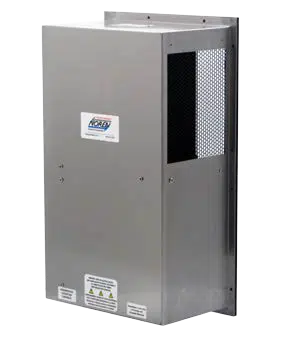
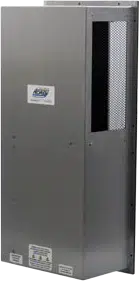
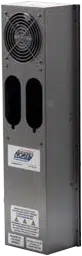
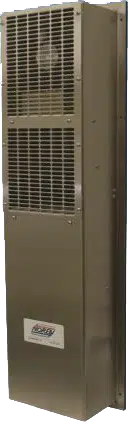
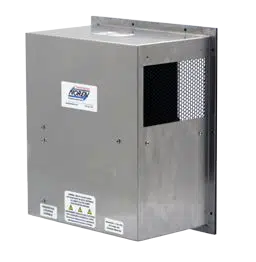
The hazardous location of air-to-air heat exchangers listed above are certified for Class I Division 2 and ATEX environments, providing passive, closed-loop cooling for electrical enclosures where flammable gases, vapors, or combustible dusts are present.
Sealed internal and external air circuits pass heat out of the cabinet without the two airstreams ever mixing. No moving parts in the heat transfer element, no refrigerant, and no water connection required, eliminating the ignition sources and maintenance overhead of conventional cooling. Models carry UL, CSA, ATEX, and IECEx certifications covering Class I Div 2, Zone 1, and Zone 2 as applicable, in NEMA 4 and NEMA 4X ratings.
These hazloc units are the right choice when ambient air is cooler than the desired cabinet temperature. If ambient exceeds your target, see the hazardous location air-to-water units. All models are manufactured by Noren Industrial Thermal Management.
Browse Available Hazardous Location Air-to-Air Heat Exchangers
The following Noren models are available through Pelmar Engineering. Available products include:
- CC405/07 Hazardous Location Air-to-Air Heat Exchanger
- CC605/07 Hazardous Location Air-to-Air Heat Exchanger
- CC905/07 Hazardous Location Air-to-Air Heat Exchanger
- CC1305/1307 Hazardous Location Air-to-Air Heat Exchanger
- CC2505/07 Hazardous Location Air-to-Air Heat Exchanger
Model selection depends on heat load (BTU/H), the difference between ambient and desired internal temperature, and enclosure dimensions. Each product page provides the detailed specifications needed for sizing.
Passive Cooling for Flammable Gas and Vapor Environments
In a Class I Division 2 or ATEX zone, every cooling component is a potential ignition source. Air-to-air heat exchangers remove that risk at the design level: no compressor, no refrigerant circuit, and no moving parts in the heat transfer element. The sealed closed loop also keeps the classified atmosphere out of the enclosure, protecting sensitive controls from gases, vapors, and dust.
These passive enclosure coolers are commonly specified for:
- Oil and gas production and processing sites
- Chemical processing plants
- Offshore platforms
- Wastewater treatment facilities
Need Assistance Selecting a Hazardous Location Heat Exchanger?
Pelmar Engineering works with engineers, maintenance managers, and procurement teams across Canada to match air-to-air heat exchangers to site classifications and heat loads. Contact us at 1-888-754-6329 or Email: info@pelmareng.com.