Hazardous Location Air Conditioners for Electrical Enclosures
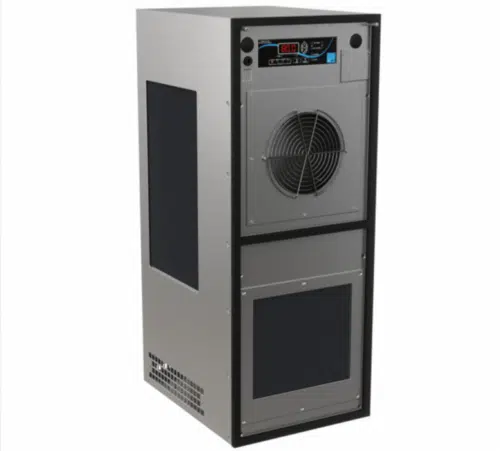
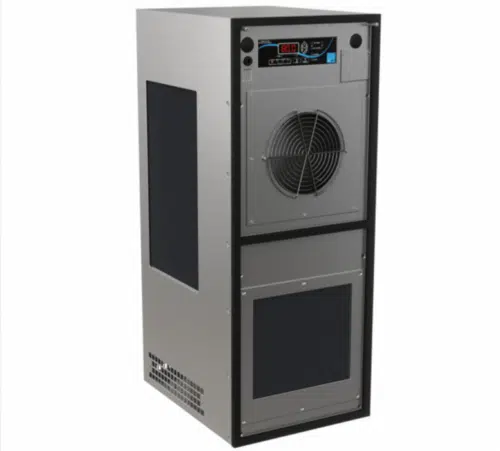
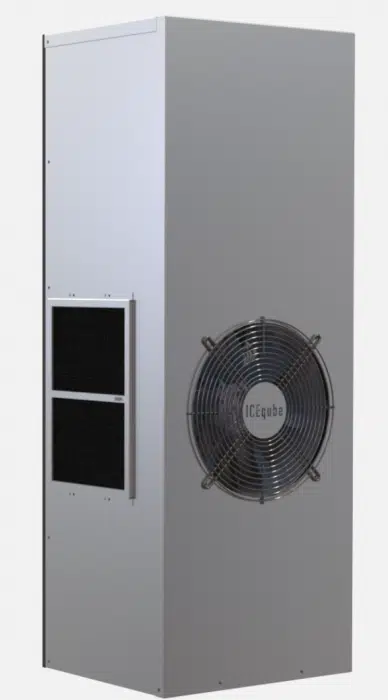
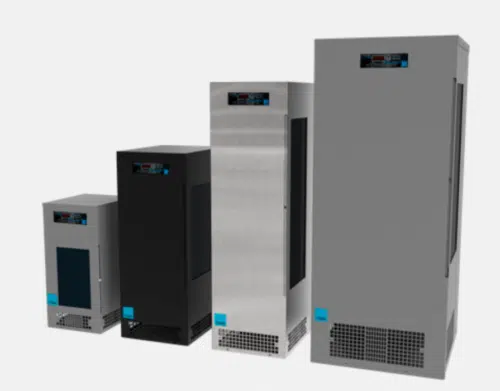
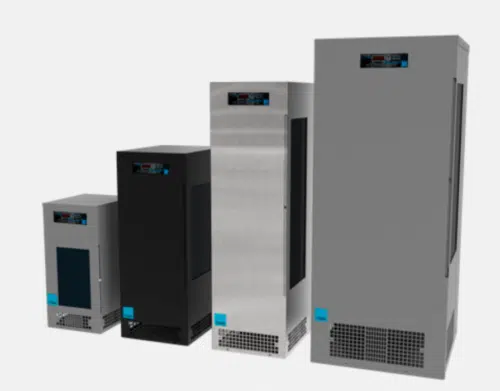
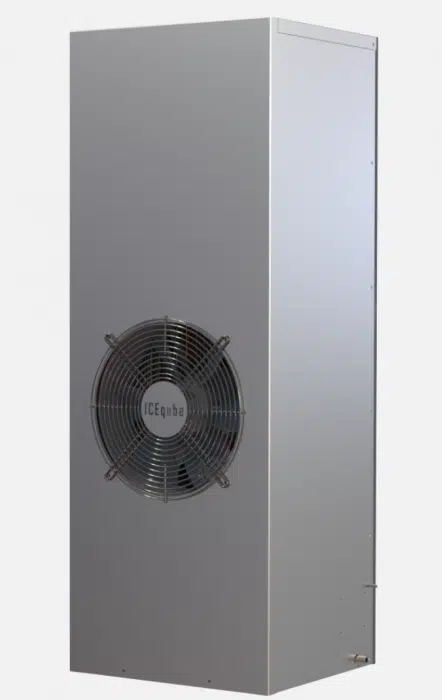
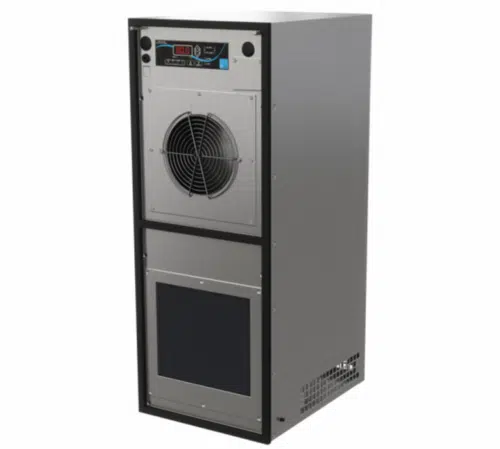
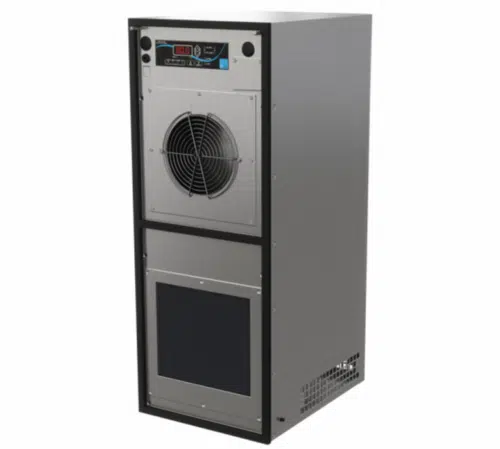
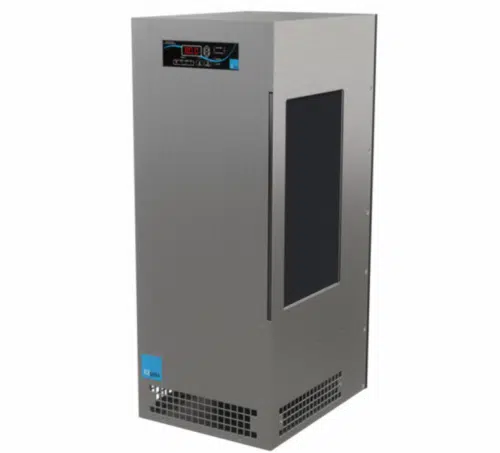
The ICE Qube air conditioners listed above are certified for Class I Division 2 (Groups A, B, C, D), Zone 1, Zone 2, ATEX, IECEx, and AEx hazardous locations, the widest certification range in Pelmar’s cabinet cooling line.

As refrigerant-based units, these air conditioners deliver below-ambient enclosure cooling. Where an air-to-air or air-to-water heat exchanger can only approach ambient or water-supply temperature, an air conditioner holds enclosure internals at a setpoint below ambient, which is critical for VFDs, PLCs, and servo drives in high-heat plants.

Engineers can filter the selection by classification: the EV Series covers Class I Div 2 and Zone 2 in vertical mount, the EX Series carries Zone 1 ATEX/IECEx certification, and the T Series provides top-mount Class I Div 2 units. These systems serve oil and gas, petrochemical, mining, offshore, refinery, and chemical processing facilities.

For an overview of the full product line, visit our ICE Qube air conditioners page. If ambient temperatures at your site stays below your target cabinet temperature, a simpler air-to-air heat exchanger may be sufficient.

Need Assistance Selecting a Hazardous Location Air Conditioner?

Pelmar Engineering works with engineers, procurement specialists, and plant managers across Canada to verify site classifications and match ICE Qube models to heat loads. Contact us at 1-888-754-6329 or Email: info@pelmareng.com.

Common Questions About Hazardous Location Air Conditioners

Use a refrigerant-based air conditioner when you need to hold the enclosure below ambient temperature, for example in high-heat plants, or when heat loads are too high for passive cooling. A heat exchanger can only cool toward ambient (air-to-air) or toward the water-supply temperature (air-to-water). If the ambient temperature at your site stays below your target cabinet temperature, a simpler hazardous location air-to-air heat exchanger may be sufficient.

Yes. Unlike heat exchangers, air conditioners use a refrigerant cycle to achieve below-ambient internal temperatures, which is required in high-ambient industrial environments or where heat loads exceed what passive cooling can handle. This makes them the right choice for protecting VFDs, PLCs, and servo drives in hot plants.

Class I Division 2 is the North American standard (NEC/CEC) for locations where flammable gases are handled but not normally present, while ATEX is the European equivalent under the ATEX directive. ICE Qube offers models certified to both standards, so the same product line can serve North American and international sites.

Zone 2 (the Class I Div 2 equivalent) means flammable gas is not normally present but may occur under abnormal conditions, while Zone 1 means flammable gas is present periodically during normal operation. Zone 1 requires stricter certification — ICE Qube’s EX Series carries Zone 1 ATEX/IECEx approval, while the EV and T Series cover Class I Div 2 and Zone 2.

The gas groups classify the type of flammable atmosphere present: Group A covers acetylene, Group B hydrogen, Group C ethylene, and Group D propane and most common hydrocarbons. The group your area is classified for determines which certified equipment you can install. These ICE Qube air conditioners are certified for Class I Division 2, Groups A, B, C, and D — confirm your site’s gas group before selecting a unit.

Yes. ICE Qube offers the EV and V Series in vertical mount and the T Series in top mount for Class I Division 2 environments. The right configuration depends on your enclosure design and available footprint.

Yes. Contact the team with your heat load (BTU/H), ambient temperature, required internal temperature, enclosure dimensions, and site classification, and we’ll verify the classification and recommend an ICE Qube model matched to your load.